
March 25, 1931: nine Black teenagers hop a Southern Railway freight seeking work. By nightfall a fight, a false accusation, and the machinery of Jim Crow justice will turn a boxcar into the opening scene of the Scottsboro case.
Women were erased by assumption. Black travelers were hunted by statute. Race shaped who could ride where—and what happened after arrest. This chapter places Black riders in hobo history without softening the South’s vagrancy regime, and it insists that Scottsboro began on a freight.
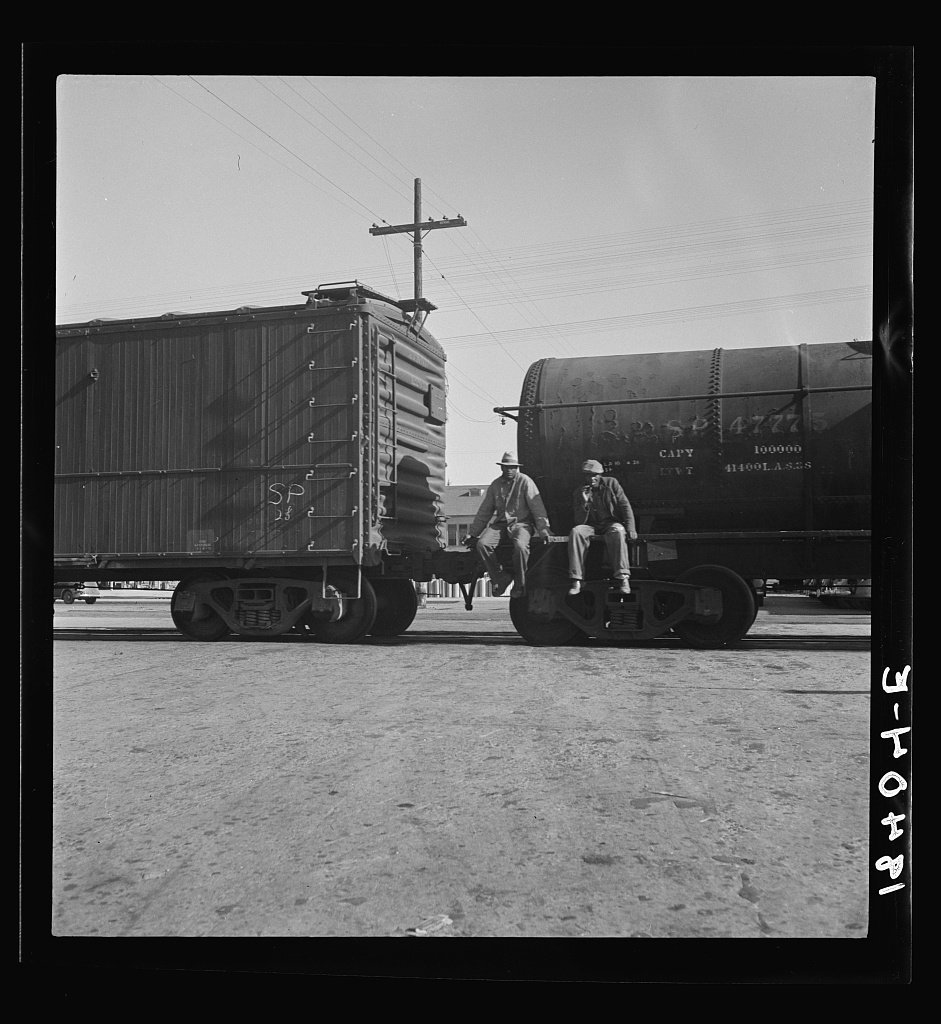
Jungles, Cars, and Color Lines
Nationally, many hobo jungles were integrated, and Black workers used freights for the same harvest and industrial circuits as white riders. In the Deep South, custom sometimes segregated cars; law made mobility itself suspect. Encyclopedia of Alabama historian Lynne M. Adrian argues hoboes were less common in Alabama than in the Midwest and West because of hostility and labor control.
Tramp Laws, Vagrancy, Convict Lease
Post–Civil War vagrancy statutes and convict leasing targeted Black freedom of movement and also swept up poor whites. Alabama’s 1903 vagrancy law hiked fines and hard labor. Birmingham police periodically raided for men who could not prove employment. A “worker” identity did not protect you if a sheriff wanted a lease gang filled. By 1932, Adrian cites about 2,000 hoboes a month through Birmingham—an encyclopedia estimate, not a census.
Scottsboro Began on a Freight
On March 25, 1931, nine Black youths boarded a freight from Chattanooga toward Alabama for work. After a fight with white riders, and after Victoria Price and Ruby Bates falsely accused them of rape, arrests at Paint Rock ignited years of trials and international protest. NMAAHC and Encyclopedia of Alabama summarize the freight origin clearly: Black teenagers seeking work, a fight with white riders, false rape accusations by white women also on the train, posse arrest at Paint Rock. The courtroom drama that followed is famous; the boxcar opening is the hobo-history fact this museum refuses to drop.
Sources: NMAAHC; Encyclopedia of Alabama.
Hard History in the Same Building
Hobo museums that only show white harvest hands repeat Jim Crow’s erase. Scottsboro began on a freight; Birmingham’s vagrancy raids were labor policy; Lange’s Kingsbury tank-car riders belong in the same building as Britt’s parade. We preserve this culture by telling who was hunted for moving—and who was celebrated for it.
The next room stays with youth on freights, but widens the lens: the Depression-era teenagers—boxcar boys and boxcar girls—who left home by the hundreds of thousands.
See Sources for works and archives cited in this room.