A Hollywood director puts on ragged clothes to learn poverty—and the audience laughs, winces, and remembers freights forever. Satire, biopic, and pulp each left a different hobo in the mind’s eye.
Songbooks and memoirs were one archive. Film was another—louder, stickier, and less careful with evidence. Genre labels matter: satire is not documentary; composite “autobiography” is not a census. This chapter names the titles that shaped memory, then walks you back to photographs and PD memoirs for proof.
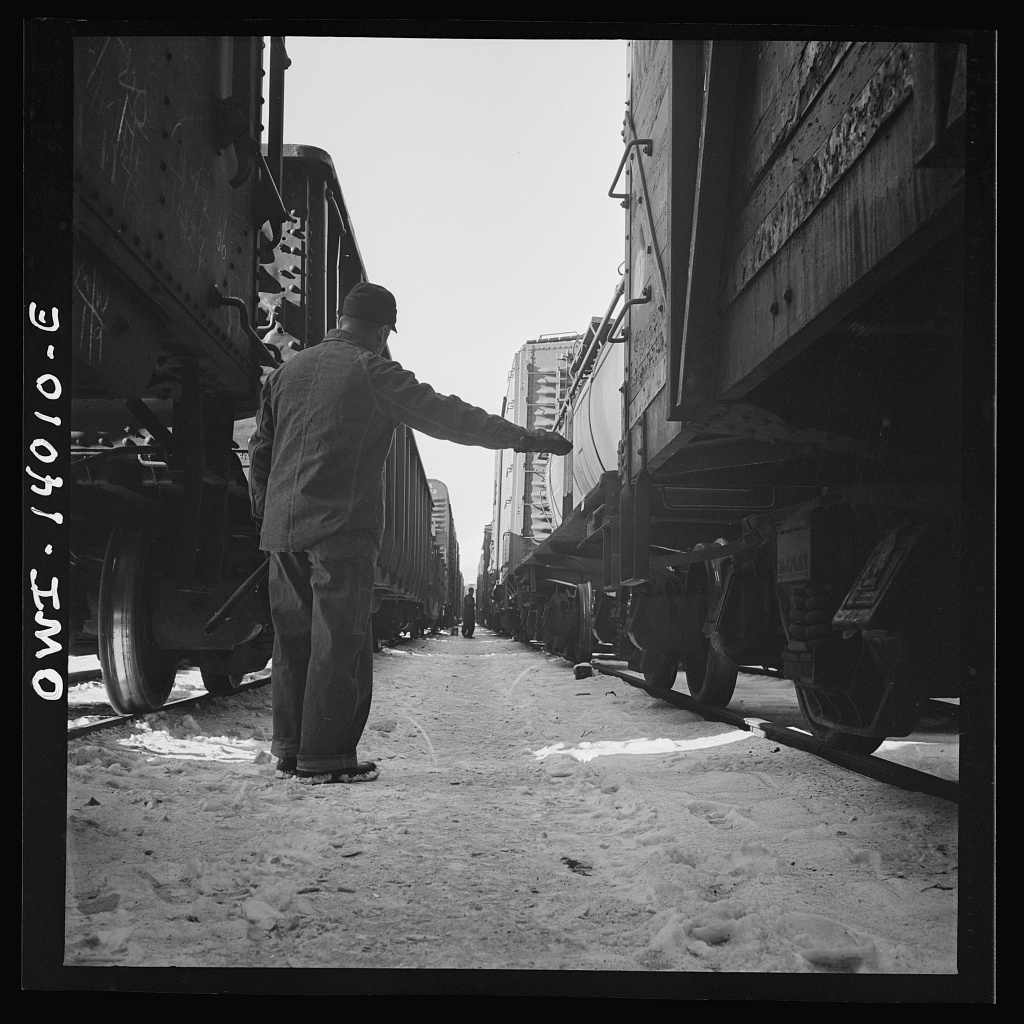
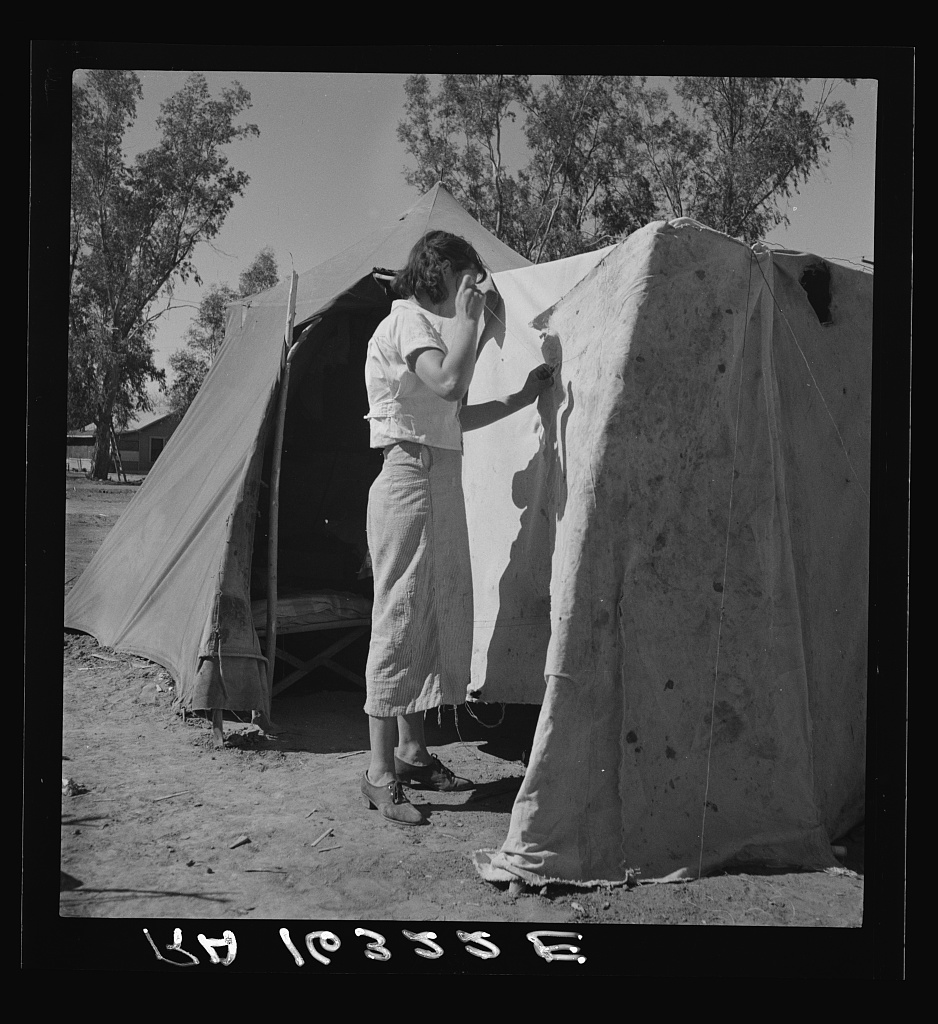
Rear brakeman, Chicago & North Western. Crew labor beside the riders’ world—the working railroad Hollywood often turned into backdrop. Library of Congress, FSA/OWI Collection. Source.Mending a tent in a pea pickers’ camp. Domestic labor on the road—the kind of still that grounds film fantasy. Library of Congress, FSA/OWI Collection. Source.
Documented Titles
Sullivan’s Travels (Sturges, 1941) — satire; National Film Registry essay at LOC.
Bound for Glory (Ashby, 1976) — Guthrie biopic with freight/migrant sequences.
Emperor of the North (Aldrich, 1973) — freight-hopping drama.
Boxcar Bertha (Scorsese, 1972) — from Reitman’s composite tale.
StillsNo copyrighted film frames in this museum.
Film as Memory, Not Evidence
Use Sturges, Ashby, Aldrich, and Scorsese to teach genre. Then walk back to FSA photographs and PD memoirs for evidence. Preservation is knowing which shelf you are on. In the early 1970s, Boxcar Bertha, Emperor of the North, and later Bound for Glory put freights back on screens. Pair them with Sturges’s 1941 satire and you get a century of projections—then return to FSA stills for cheaper rights and harder truths.
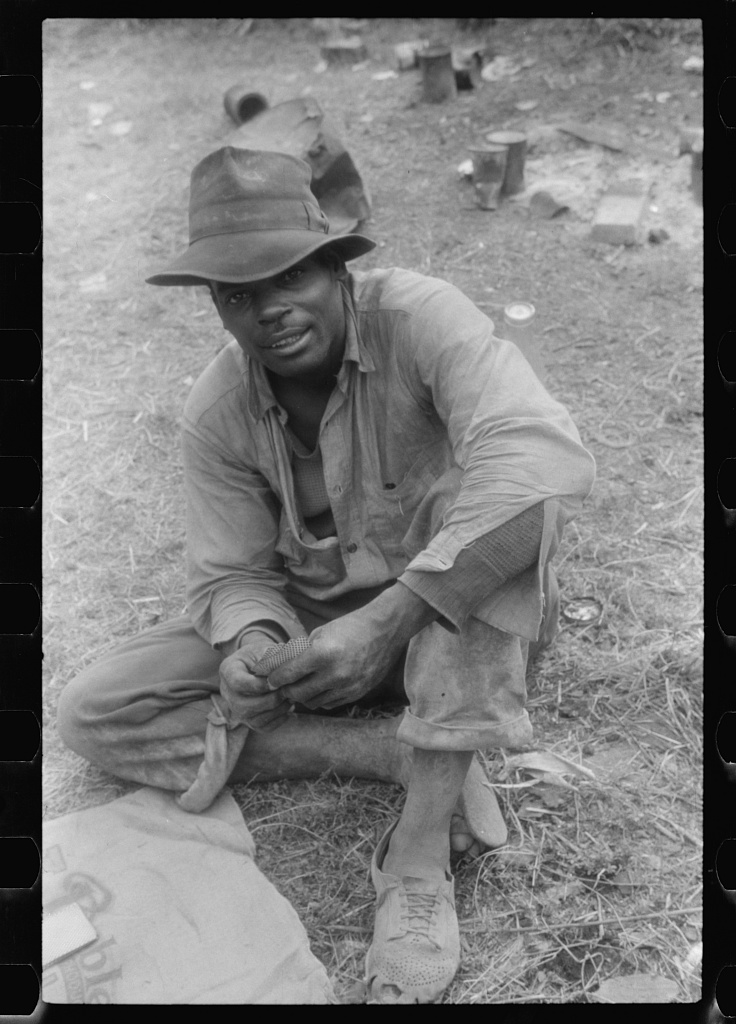
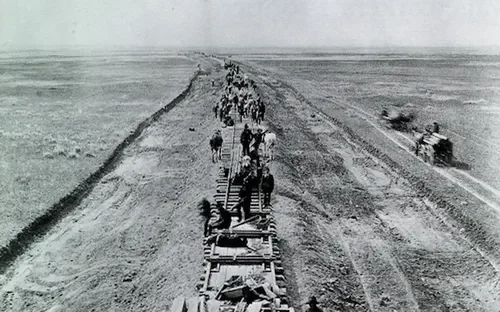
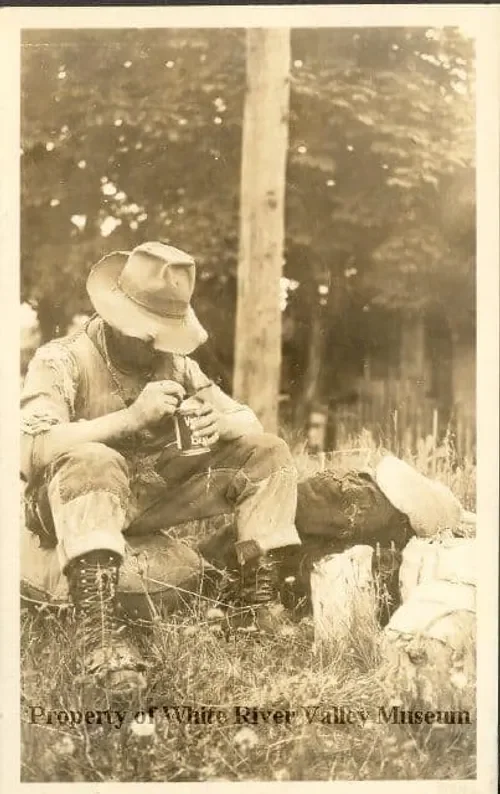
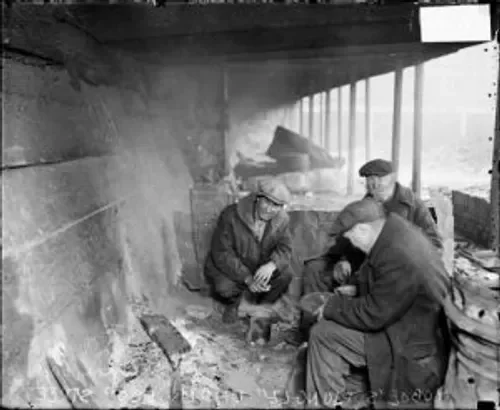
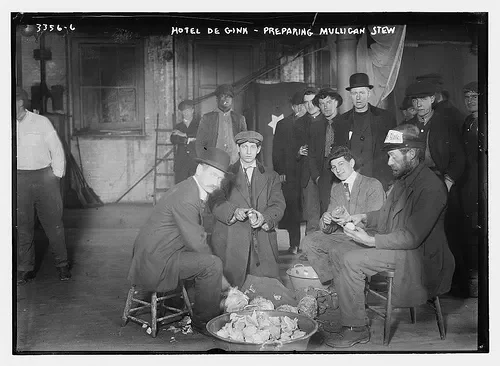
Lunch-hour cards at Belcross. Florida migratory workers at a North Carolina grading station—downtime the movies rarely linger on. Library of Congress, FSA/OWI Collection. Source.Men at railroad construction. Track building and maintenance fed the same migratory labor pool that rode freights between jobs. Period photograph. See Sources. Source.Harvest hands with tools. “Hoe boys” lore tied migratory farm labor to the word hobo—one contested etymology among several. Period photograph. See Origins.Three hobos, Chicago, 1929. Chicago’s main stem remained a winter hub on the eve of the Depression surge. Period photograph. See Sources. Source.Mulligan stew / Hotel de Gink era. Communal stew and cheap lodging names mark urban hobohemia’s mutual-aid infrastructure. Library of Congress (public domain). Source.
That closes Culture and Code. The next wing turns from song and screen to hard times and organizing: the Great Depression, the IWW on the rails, and Hobo College.
See Sources for works and archives cited in this room.