
Since 1900, Britt, Iowa, has hosted a gathering that outlived steam: Tourist Union No. 63’s National Hobo Convention—part reunion, part ritual, part small-town parade.
Movements and Hard Times closed on Hobo College’s chalkboards and Depression freights. This last wing turns to a town that said yes. Britt made the hobo a guest of honor. The convention is folklore and civic fact at once—a wry “tourist” union born in a boxcar, a 1900 publicity gamble that actually drew riders, a Depression-era revival that crowned kings and queens, and a living August festival that still ladles mulligan by the vat.
A Union Born in a Boxcar
The story begins not in Iowa but on a slow freight toward Indianapolis in the fall of 1896. Two riders sharing a car—Charles Noe, a young Illinois newspaperman who had hopped freights since boyhood, and “Onion” Cotton, a road-wise traveler who ran a small flop hotel in Danville—talked through the common needs of “tourists,” period slang that covered itinerant workers and other road men. They sketched a protective brotherhood: cards, buttons, a constitution, and an annual meeting. By the next spring they had printed membership gear and called a convention at Chicago. Young riders came by the hundreds; older road men who had been moving since the Civil War were welcome. A second Chicago gathering followed in 1898, and chapters formed nearby.
The name they chose—Tourist Union No. 63—was half joke and half armor. Calling migratory workers “tourists” claimed respectability in a country that still jailed men for vagrancy. Exactly who belonged is debated in the surviving press: some accounts describe lively young men inviting genuine roadsters for “zest,” while railroad officials and parts of the public feared a socialist revival or a return of Coxeyism. Pressure helped push the third convention out of Chicago to Danville. What is solid is the lineage: Noe and Cotton, Chicago then Danville, and a union that treated the road as a shared condition rather than a private vice. (Claims that other founders launched Tourist Union No. 63 in that boxcar are not well attested in the Iowa scholarship that rebuilt the 1900 story; this museum stays with Noe and Cotton.)
Why Britt Bid for 1900
Britt owed its existence to the Chicago, Milwaukee and St. Paul Railroad—a station town in north-central Iowa where freights still mattered. In 1899, local men Thomas A. Potter and Thomas Way read about a Tourist Union convention in a Chicago paper and wrote Grand Head Pipe Charles Noe, begging him to bring the 1900 meeting to Britt. Noe rode the Milwaukee Road out to inspect. He liked the rail traffic through a town of about 1,500 and the black Hancock County soil he called “springy” under a walking delegate’s step. Britt’s boosters promised hospitality in comic-serious terms: a “full deed” to the city for the gathering, two days of slumgullion, and dogs muzzled for the duration. The invitation was civic theater with a commercial edge—put Britt on the map—and Noe accepted.
August 22, 1900: Joke Meets Freight
On August 22, 1900, Britt hosted what became its first National Hobo Convention. More than a dozen midwestern papers sent correspondents; stories ran from Boston to San Francisco. Many reporters expected a hoax—citizens sending picturesque copy about a tramp meeting nobody thought real hobos could find. Then riders arrived. Contemporary accounts describe tin cans, whiskers, races, and speeches; one ticket of “professional tramps and hoboes” elected figures remembered in the press as Filipino Joe and Tomato Can Smith. Embellishment was part of the product—Holm’s careful reading of the clippings warns that correspondents padded scenes—but the common factors hold: Britt staged the show, Tourist Union No. 63 answered, and the town’s name stuck to the gathering.
Then the convention largely lapsed in Britt for a generation. Iowa history summaries say it was not held there again until 1933; local lore sometimes jokes that citizens needed years to “recover.” Keeping an annual hobo homecoming would wait for harder times.
1933: Revival in Hard Times
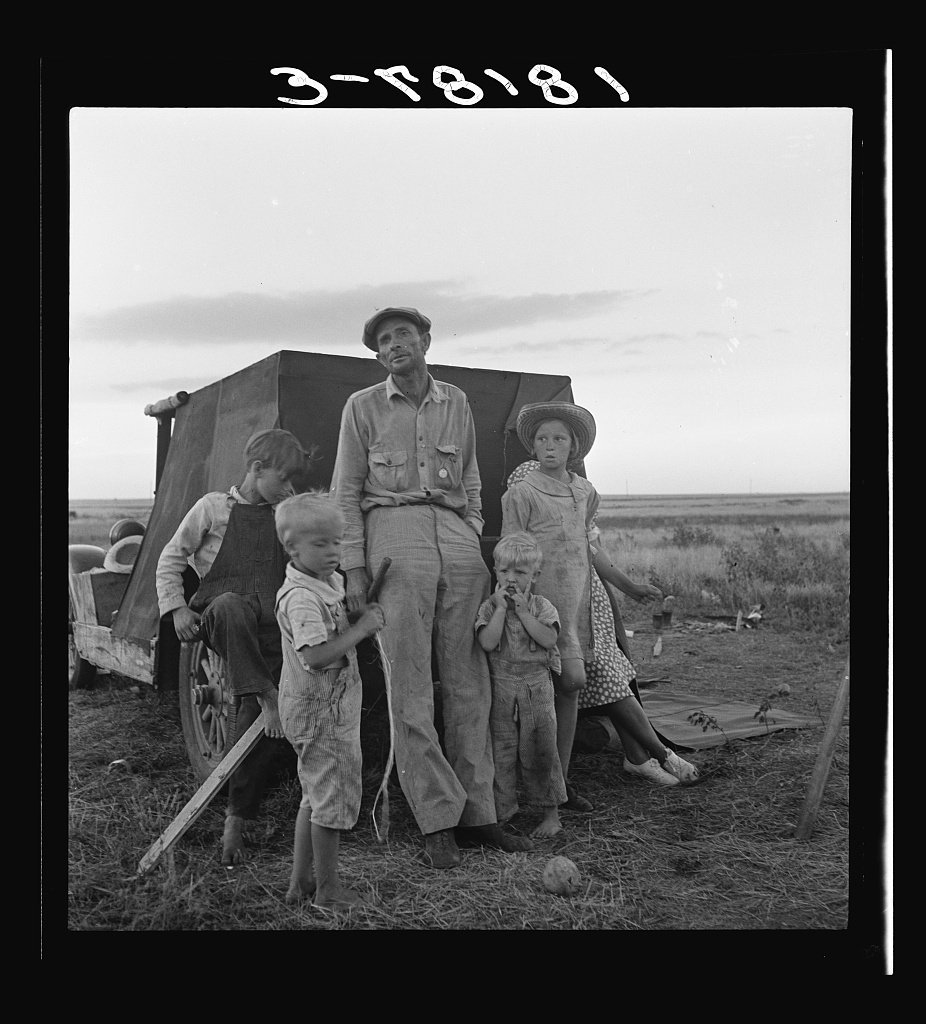
The Great Depression—already walked in this museum’s Depression room—made migratory life visible again. In 1933 Britt revived the convention on an annual footing (some later summaries say 1933–34 for the restart). Attendance that year is remembered as swelling the small town past four thousand visitors; Tourist Union delegates were housed in improvised quarters and fed for a two-day stay. The revival crowned a Hobo King: Hairbreadth Harry, described in Iowa papers as a bearded road man in his fifties who had been riding for years, received a crown fashioned from coffee cans and a red cape. Applause, costume, and speech—not a government office—made the title.
The timing was not accidental. When jobs collapsed and freights filled with clerks, farm sons, and teenagers, a town that already owned a hobo legend could market reunion and relief theater together. Except for World War II interruptions, the second weekend of August stayed on the calendar.
Kings, Queens, Mulligan, and Memory
Each August the convention still elects Hobo King and Queen by short speeches and crowd applause. The titles are ritual, not census: they honor people the gathering recognizes as carrying the road’s memory. Maurice “Steam Train Maury” Graham, of Toledo, Ohio, became the best-documented modern king—crowned five times (1973, 1975, 1976, 1978, and 1981), later named Grand Patriarch, and remembered in the New York Times at his death in 2006 as a steward of hobo lore. Connecticut Shorty (Betty Moylan), daughter of the road man Connecticut Slim, was crowned Hobo Queen in 1992 and has remained a public voice for preservation. Minneapolis Jewel (Julianna Porrazzo-Ray) was elected queen five times (1986, 1991, 1997, 2011, and 2017); in 2017 she and her husband Tuck were named queen and king together. Other Britt names—Pennsylvania Kid, Hard Rock Kid, Frisco Jack—appear in museum cases and oral history; treat undated lists as heritage lore until a year is pinned.
Food is part of the rite. Mulligan stew—whatever the pot can hold, shared under jungle rules—is cooked in bulk for visitors. A temporary Hobo Jungle rises for the weekend: fire, talk, music, and the ethic of contribute what you can. Those practices echo the Ethical code room’s warning that printed “1889 commandments” are contested, while the shared pot is documented again and again. After the tents come down, Britt keeps quieter memorials year-round—cemetery section, Queen’s Garden, jungle site, National Hobo Museum—walked in detail in the next room.
From Gathering to Living Heritage
Tourist Union No. 63 began as riders organizing themselves against stigma and isolation. Britt’s 1900 yes turned that organization into a civic spectacle. The 1933 revival welded spectacle to Depression mobility. By the late twentieth century, fewer people arrived by freight; more came by highway, with grandchildren, historians, and tourists. Smithsonian’s reporting from a recent Britt jungle still finds real riders beside hobbyists and fans. The convention’s job changed: less a hiring-hall reunion than a living heritage festival that keeps monikers, stew, and stories from collapsing into a cartoon bindle.
Look backward and the threads meet. Origins and Work circuits explain why rails plus seasonal wages produced a mobile class Noe and Cotton could unionize. Hobo College and the Ethical code room show other architectures of mutual aid beside Britt’s parade permit. The Depression chapter explains why 1933 felt like the right year to make the gathering annual. Look forward one door to Britt today for the museum cases, cemetery, and year-round map. The town that joked about tramps in 1900 still sets a place each August—and still asks visitors to remember that the road was work, risk, and chosen kinship, not a costume alone.
See Sources for works and archives cited in this room.