
Night, a westbound overland, a young rider trying the blind baggage. Empty stomach. Snow-sheds ahead. Jack London later wrote the hesitation into literature—but thousands of unnamed riders felt the same physics of steel and cold.
Labels sorted people. Practice kept them alive—or failed to. This chapter follows a day and a night on the freights as memoir and photograph record them: how a rider left town, where he camped, what threatened him between the wheels and the bulls, and why this museum describes that world without teaching anyone how to re-enter it.
Catching Out
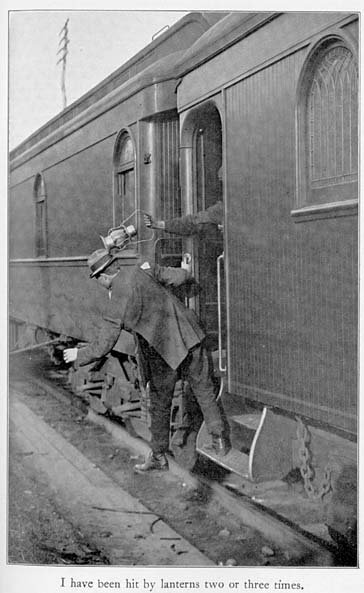
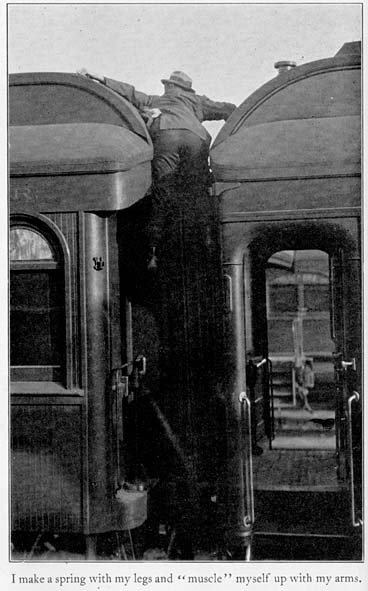
To catch out was to leave town on a freight. Riders learned which yards were watched, which trains stopped rarely, how to mount a ladder, and where to ride: empty boxcars joked about as side-door Pullmans, grainers, flatcars—or more dangerous places between cars, on the rods, or on the blinds. Mistakes cost limbs and lives.
Poet W. H. Davies, who tramped in America before returning to Britain, lost a foot under train wheels—a documented cost of the road. London’s chapter title “Holding Her Down” names the skill of staying aboard a fast train: the verb is survival, not sport. This museum names the risk without teaching technique.
Jungles
Trackside camps—jungles—offered fire, shared food (often a mulligan stew), information about jobs and hostile towns, and informal rules about theft and violence. Road names and monikers circulated. Nationally many jungles were integrated; in parts of the Jim Crow South, custom and policing made mixed camps and mixed cars harder and more dangerous.
Work Between Rides
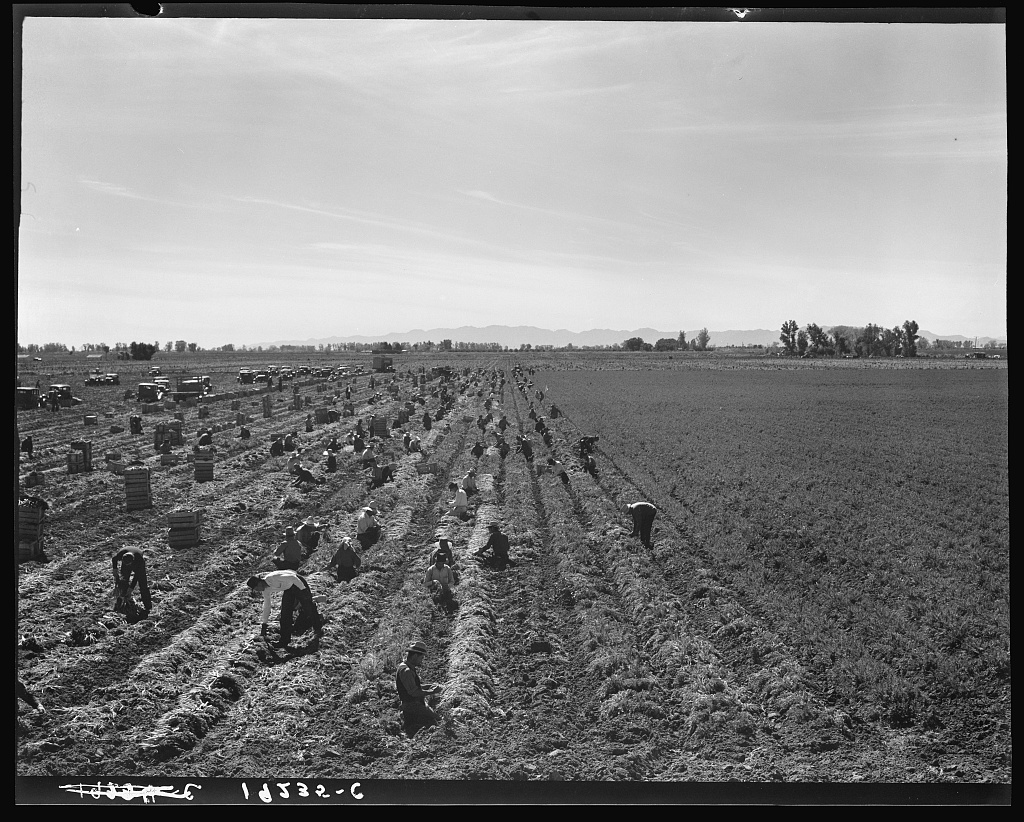
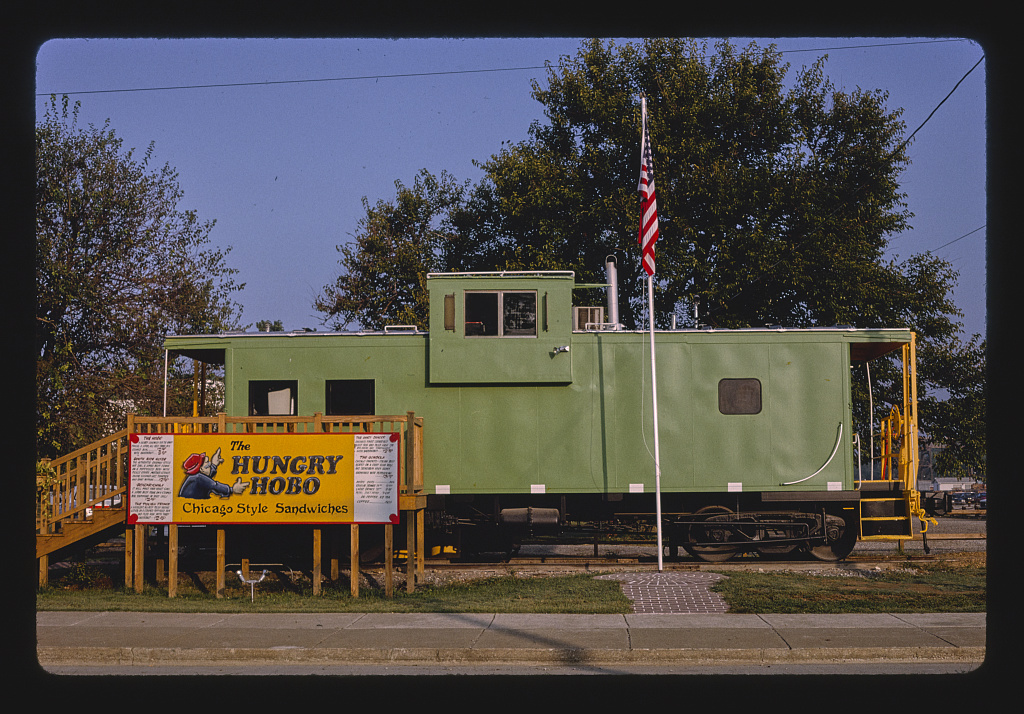
Life on the rails was not endless motion. Riders timed freights to harvest openings, timber calls, and construction seasons. Between stakes they washed dishes, cut wood, or carved nickels. The rhythm—earn, ride, earn—is what separated the self-called hobo from the caricature of pure wandering, and it is the bridge into the next room’s map of work circuits.
Bulls and Other Dangers
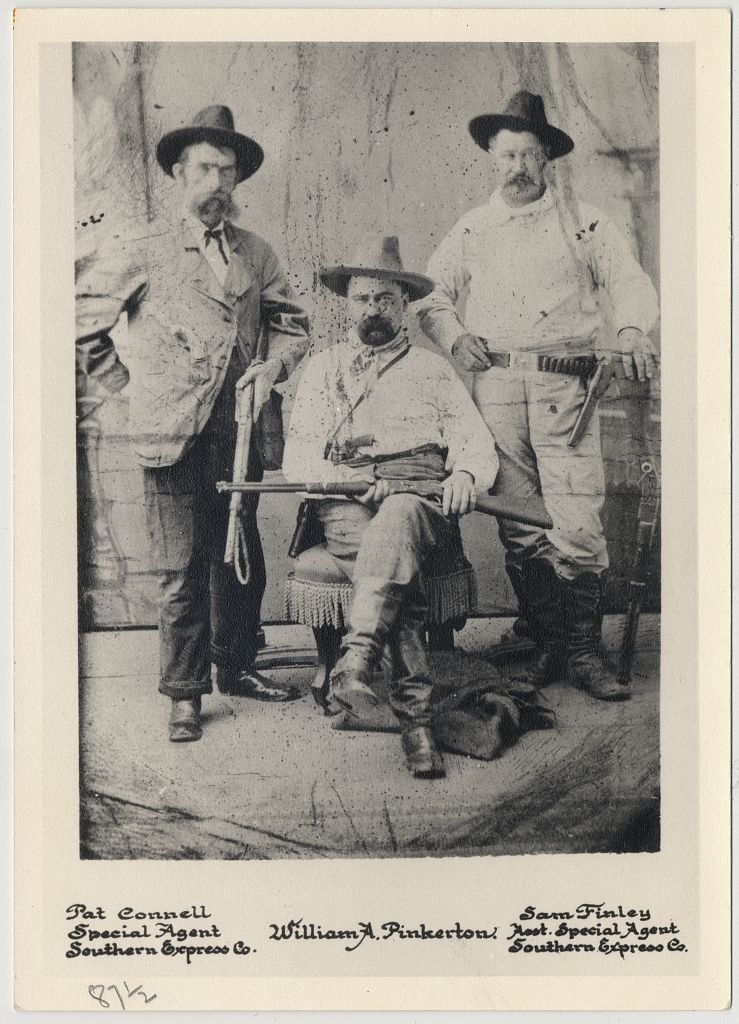
Railroad police and special agents—bulls—cleared yards and freights. The Pinkerton tradition of railroad special agents fed the occupation’s reputation. Riders also faced brakemen (shacks) demanding cash, weather, tunnels, and equipment failures. Period railroad claim-agent figures reprinted in union papers speak of thousands of trespasser deaths and injuries in a year; treat specific totals as period journalism, not a modern dashboard.
A Chorus, Not a Hero
London’s westbound overland, Davies’s lost foot, Vachon’s Dubuque boy, Lange’s San Joaquin riders—each is a documented angle on the same problem: how to move a poor body across a rich country’s freight network. London’s account of riding outside through snow-sheds is valuable because it admits fear. Preservation is not bravado.
The story is not one hero. It is a thousand near-identical nights. The next room asks where those nights were aimed: the harvest belts, timber camps, icehouses, and section gangs that turned freights into an unpaid bus between wages.
See Sources for works and archives cited in this room.