
A smoking cowboy in chalk slides by on a boxcar. Someone asks who drew it. The answer, if there is one, is a tradition—not a single midnight genius.
The last room separated tourist “code” charts from real marks. This chapter gathers what is solid: monikers as identity, date, and direction—names earned in camp, carved on water tanks, chalked on steel—and how Britt still crowns people by those names. Fake pictogram charts stay in the gift shop; see Signs and symbols.
Why a Road Name
Legal names followed warrants, employers, and relatives. A moniker traveled lighter. It offered anonymity from bulls and town police, reputation among people who would never see your birth certificate, and identity beyond the law’s paperwork. In a jungle you were Connecticut Slim or Frisco Jack before you were anybody’s son. The name carried craft (what you did), geography (where you claimed), and story (what happened to you). Tradition mattered: once a name stuck, repeating it was courtesy and navigation. Jack London’s The Road describes water-tank directories—lists of monikers with dates and directions—as a traveler’s register across continents. A mark that said who you were and which way you were headed told the next rider whether a friend had passed. That is the opposite of a secret pictogram chart: it is a public guestbook on steel and wood, readable by anyone who knew the culture’s handwriting.
Anonymity was never total. Railroad bulls, town cops, and newspaper writers learned popular monikers too. The point was a working identity that could move when a legal one could not—or should not—move as freely. Reputation followed the name: a profesh known as fair in the jungle, or a yegg known as trouble, arrived before the face did.
How Names Were Earned
Monikers were given more often than chosen from a catalog. Origin town or state stuck: Frisco, Minneapolis, Connecticut. A body trait stuck: Slim, Shorty. A trade or prop stuck: Steam Train, Cardboard, Scoop Shovel. An incident stuck: a first freight, a long walk, a joke that would not die. Sometimes a mentor named you; sometimes the jungle did. Women and family lines carried names too—Connecticut Shorty and New York Maggie keeping Connecticut Slim’s stem alive in Britt’s museum work. The point was recognition—so the next campfire knew who had arrived, and so a letter or chalked note could find you under a name that meant something on the road.
Undated lists of “famous hobos” in souvenir booklets mix verified riders with lore. Prefer a museum case, oral history, dated photograph, or a pinned convention year before treating a name as biography. The Language and slang room reminds us that words shift by decade; monikers do too—some fade when the rider catches the Westbound, others get inherited or imitated (Livingston complained of fake A-No. 1s).
Tanks, Boxcars, and Two Traditions of Marks
Hobo monikers were personal road names—spoken in camp, written with date and direction so friends could follow. Separately, railroad workers chalked and paint-sticked cars for yard work, then sometimes for folk drawings that became famous in their own right. Maintenance marks—“good order,” initials, dates—grew into characters. Bill Daniel’s film Who Is Bozo Texino? traces the smoking-cowboy mark across decades; Railroad Magazine (July 1939) identified the original hand as Missouri Pacific trainman J. H. McKinley of Laredo, Texas, and noted that successors kept the character alive long after one man’s career. Palm Tree Herby (Herbert Meyer), a St. Louis-area switchman (often linked to the Terminal Railroad Association), chalked a sombrero-and-palm figure on tens of thousands of cars from the 1950s until his death on December 9, 1995. Those are railworker chalk traditions that hobos and fans also watched for—not the same thing as a Britt king’s spoken moniker, though both live on steel.
Water-tank carvings and boxcar signatures by riders belong with London’s directory: I was here, going west, August. Bozo and Herby belong with crew folk art that crossed into rider lore and later graffiti history. A third layer—modern aerosol tagging—is outside this museum’s period focus. Keep the distinctions clear so the wall teaches looking: personal road name, crew chalk character, tourist pictogram myth.
Water-tank directories
London’s The Road describes monikers on tanks as a traveler’s register across continents.
Bozo Texino
J. H. McKinley and successors; railworker chalk art documented in 1939 railroad press and later film—not a single hobo inventor myth.
Palm Tree Herby
Herbert Meyer, St. Louis switchman; mid-century crew chalk that riders also watched for.
Not the chart
Tourist pictogram sheets are mostly folklore. See Signs and symbols.
Verified Names, One Line Each
A-No. 1 (Leon Ray Livingston, 1872–1944). Author-tramp who signed fences, freights, and stations; a 1908 New York Times dispatch named him Ray Livingston of Cambridge Springs, Pennsylvania; books sold under the moniker. Treat his “hobo signs” system as self-promotion mixed with lore—see Symbols.
Steam Train Maury (Maurice Graham, 1917–2006). Five-time Britt Hobo King, later Grand Patriarch; Toledo road man whose moniker became Britt’s public face—see Tourist Union No. 63.
Connecticut Slim (Timothy Walter Moylan, 1911–1990). Steam-era rider; father of Connecticut Shorty and New York Maggie, who preserve his name in Britt museum and oral history (UI Hobo Archive).
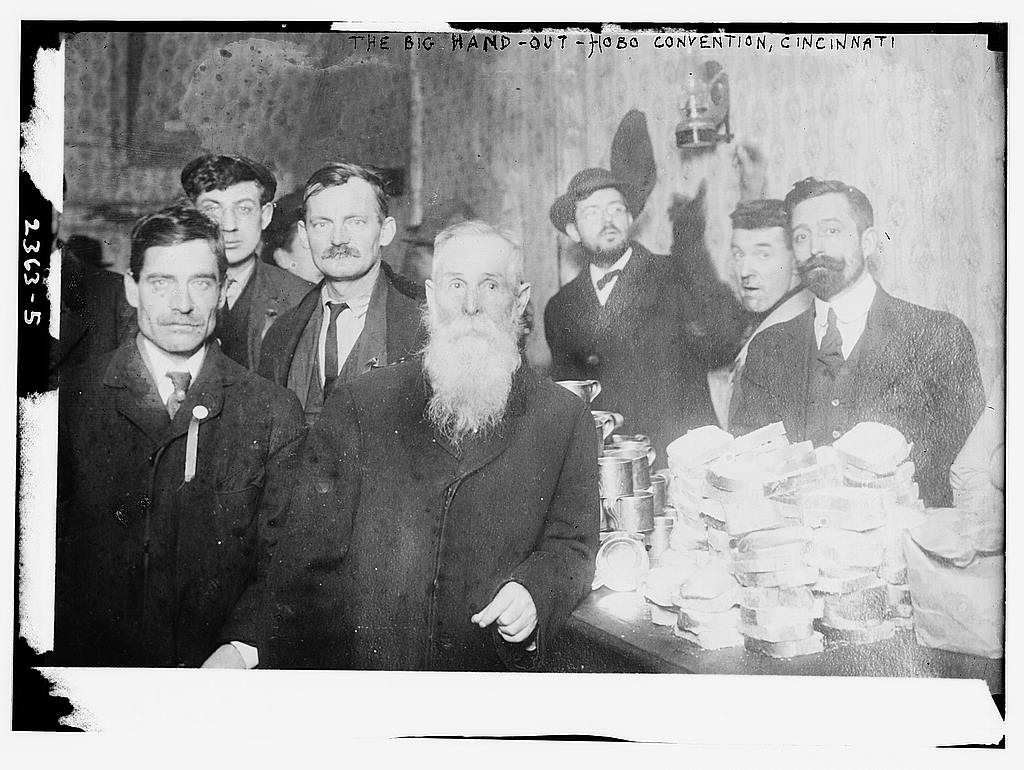
Frisco Jack. Britt-convention presence documented in period photos and museum craft (tin cups marked with the moniker); treat undated “king lists” as heritage lore until a year is pinned.
Cardboard. Appears in Britt convention photography and 1989 Hobo Archive interviews discussing bulls and the road; moniker before legal name in the public record.
Minneapolis Jewel (Julianna Porrazzo-Ray). Multiple-time Britt Hobo Queen (including 1986, 1991, 1997, 2011, 2017); the moniker is how Britt and the press know her—see convention and Britt today.
Boxcar Bertha. Popular name from Ben Reitman’s composite “autobiography” of Bertha Thompson—useful as culture, not as a clean census of one rider. This museum already flags the composite elsewhere.
Other Britt names—Pennsylvania Kid, Hard Rock Kid, Scoop Shovel Scotty, Cinderbox Cindy—appear in museum cases and memorial culture; label undated souvenir lists as lore.
Britt Crowns the Moniker
At the National Hobo Convention, kings and queens are nominated and cheered by road name. Crowns and coffee-can regalia go to Steam Train Maury or Minneapolis Jewel, not to a driver’s-license line. Speeches, parade floats, and museum labels use the moniker first. The jungle, Friday memorial, and Main Street cases keep those names as living brands: you meet Connecticut Shorty as Shorty; you read Frisco Jack on a tin cup; you hear Cardboard in an archive interview. Election by applause is itself a naming ritual—the crowd ratifies the handle.
That continuity is why this wall matters beside the Tourist Union No. 63 and Britt today rooms. The same culture that once needed anonymity for survival now needs the moniker for memory: who rode, who cooked, who kept the museum open, who caught the Westbound. Look backward to Symbols for what is not a moniker; look forward to Language for the slang that traveled with the name.
Names on steel need words in the mouth. The next room turns to the slang that traveled with those monikers.
See Sources for works and archives cited in this room.