
In 1869 a golden spike closed the first transcontinental railroad. Within a few years the same rails that moved freight and armies were also moving men who had no ticket, and after the Panic of 1873 the newspapers discovered a new “army” of tramps.
The American hobo was not eternal. He appeared at a particular moment, where three things overlapped: a national rail network, a new economy of wage labor, and a run of severe depressions. This chapter follows that story in order, from the end of the Civil War to the crowded hiring halls of Chicago, and it does so without pretending that the origin of the word hobo itself is settled.
Rails, Veterans, and the Search for Work
The story begins with the end of a war. After 1865, demobilized soldiers and workers displaced by the fighting took to the railroads in large numbers, and the railroads were growing faster than anything else in the country. The first transcontinental line opened in 1869, and between 1866 and 1873 alone roughly 35,000 miles of new track were laid. The railroads became the nation’s largest non-agricultural employer, and for anyone looking for work far from home, they became the main artery as well.
The work itself pulled people outward along those lines. Grading camps, bridge gangs, timber operations, and seasonal farms that only the rails made reachable all needed hands for a few weeks or a season, then let them go. A man who finished one job had every reason to climb aboard a freight and ride toward the next. The hobo as a recognized type would not take shape for another two decades, but the conditions that produced him were already laid out along the ties.
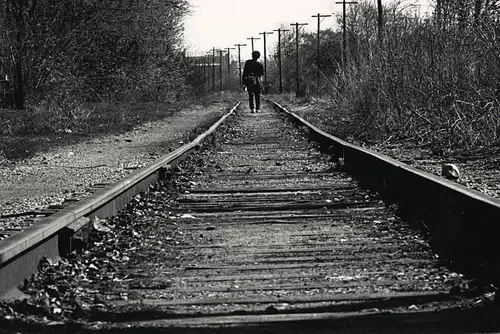
The Panic of 1873 and the “Tramp Army”
Those conditions turned into a national crisis on September 18, 1873. That day the banking house of Jay Cooke & Company, heavily invested in railroad construction including the Northern Pacific, failed. Panic followed. Dozens of railroads went bankrupt, tens of thousands of businesses failed within two years, and unemployment climbed sharply. Almost overnight, a visible army of jobless men appeared on the roads and on the freights.
The language of the time struggled to describe them. Historian Todd DePastino notes that the word tramp, which during the war had meant a hard march, took on a new meaning in 1873: the vagrant “with no visible means of support.” Many of these early road men were veterans, riding the same rails that had once carried their regiments. To the riders, that mobility was a way to survive. To town councils and police, it looked like disorder.
Respectable opinion rarely connected the two halves of the picture. Charity writers moralized about idleness, cartoonists mocked the tramp as a lazy menace, and contemporary observers often denied that the depression had anything to do with the men on the roads. Part of the problem was vocabulary: the word unemployment was itself still new in American English. What the riders knew in their stomachs would take social science decades to name clearly.
A New Word for a New Kind of Worker
By the end of the 1880s the men on the freights needed a name that set the working traveler apart from the vagrant of the cartoons, and the West supplied one. The word hobo is first securely attested in Western, often Northwestern, American English around 1889 to 1890. Where it came from is unknown. Folk explanations such as “hoe-boy,” “Ho, boy!,” “homeward bound,” and the French haut beau circulate widely, but etymologists such as Anatoly Liberman find none of them convincing.
What matters to the historian is not the word’s birth but how people used it. By the depression of 1893 to 1897 it had entered common speech for the migratory worker who traveled to find wages, as distinct from the tramp who traveled without working and the bum who neither traveled nor worked. Newspapers, police blotters, and the riders themselves argued over whether a hobo was a worker or a threat, and that argument, which the next room takes up in detail, never fully ended.
The people who wrote about the road in these years fed one another’s work. Jack London dedicated The Road to Josiah Flynt, “The Real Thing, Blowed in the Glass,” whose tramp ethnography helped shape how London told his own story. Memoir and early sociology grew up together around 1900, and both drew on the same oral knowledge riders passed along the line.
The Panic of 1893 and the Rise of Hobohemia
The second great depression of the era turned a scattered phenomenon into a continental one. Bank failures, railroad collapses, and mass unemployment sent another wave of men onto the freights, and this time they joined a world that had been forming for two decades. Transient labor now had its own camps, its own slang, its own informal politics, and its own city hubs.
The most famous hub was Chicago’s West Madison Street, the main stem, lined with employment agencies hiring for harvest, lumber, and construction work. Settlement-house workers and University of Chicago researchers would later call this world “hobohemia” and treat it as a textbook case. The riders simply called it the road. Both were looking at the same freight yards from different sides of the tracks.
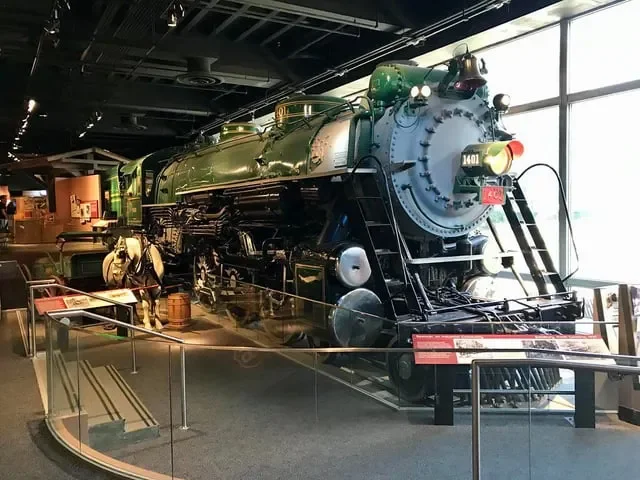
Why the Origins Still Matter
The first transcontinental railroad and the word hobo are a full generation apart. The network came first, and the name arrived only when economic crisis filled that network with men looking for work. Every later chapter in this museum rests on that foundation of rails, wage labor, and crash: the moral panics about tramps, the organizing of the Wobblies, the parades at Britt, and every moniker chalked on a water tank.
Without 1873 and 1893, the word hobo might never have needed inventing. With them, the United States gained a mobile working class that official America alternately hired, arrested, romanticized, and erased. The voices that survive, London’s night on the blind baggage, Flynt’s tramp geography, and the photographers’ captions of later decades, are what keep that class from shrinking into a single cartoon figure with a stick and a bindle. The next room asks the question the riders themselves argued over most: what, exactly, separated a hobo from a tramp or a bum?

See Sources for works and archives cited in this room.