
A freight pulls in. The crew stares. Ethel Lynn, publishing in 1917, writes herself into a literature that usually erased women from the open car—except as joke or moral panic.
The previous room ended on the anonymous majority. This chapter turns to the women inside that majority. They rode for work, health, love, and survival. The archive is thinner than the men’s; what survives must be read carefully. We center a public-domain memoir and refuse to treat a composite as a census.

Ethel Lynn, The Adventures of a Woman Hobo (1917)
Published by George H. Doran, Lynn’s book is public domain in the U.S. (Project Gutenberg #62971). She recounts tandem-bicycle and rail-adjacent travel, encounters with train crews, and the shock of being seen as a “lady tramp.” Read episodes as her narrative—not every scene independently corroborated. Because the book is PD, this museum can quote and link it freely. That is rare for women’s road narrative.
Why Women Disappear from the Picture
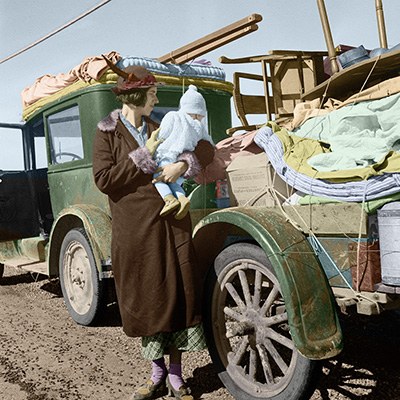
Police, journalists, and many jungles assumed a male road. Women travelers risked sexual violence, arrest under morals and vagrancy laws, and disbelief. Some traveled with partners or family groups—as Lange’s Yakima Valley freight family shows—outside the lone-male stereotype. Depression-era photographers documented women migrants more often as family members than as solo freighthoppers, shaping what later viewers think was possible.
Boxcar Bertha Is Not a Documentary Life
Ben Reitman’s 1937 “autobiography” of Box-Car Bertha is a composite. Useful as pulp and as a clue that women were present; useless as a single biography. Keep Reitman’s Hobo College work separate from this literary project. Lynn = authored memoir (read critically). Bertha = composite fiction framed as life story.
Family Freights and How to Read the Texts
Lynn’s 1917 memoir lets us hear a woman answer a farmwife’s “lady tramp” shock in her own sentences. Lange’s Toppenish series shows a family unit that traveled by freight—women and children inside migratory poverty, not outside history. Reitman’s Bertha shows how publishers preferred a spicy composite to ordinary women’s work histories. Preserve Lynn’s Gutenberg edition and the Yakima negatives side by side so “women on the rails” is not a single genre.
The next room follows another erased majority: Black travelers whose mobility the South’s vagrancy regime treated as a crime, and the freight that opened the Scottsboro case.
See Sources for works and archives cited in this room.